



What is an MSc in Investment Banking & Financial Engineering?
The MSc in Investment Banking & Financial Engineering trains students for careers in strategic financial consulting and equity operations. It is RNCP level 7 certified by the French Ministry of Employment. The first year consolidates the fundamentals of finance and accounting, while the second year develops expertise in mergers and acquisitions, private equity and complex financial packages. This excellent programme prepares students for high-level responsibilities, thanks to its professional approach and preparation for AMF certification.
Professional certification
Level 7 (EU) professional certification in Financial Strategy, NSF codes 313 and 314, awarded by INSEEC MSc, registered under number 40177 in the RNCP (Répertoire National des Certifications Professionnelles) by decision of the Director General of France Compétence.
Objectives and skills
The aim of the MSc Investment Banking & Financial Engineering is to train professionals capable of advising companies on their strategic external growth, financing and financial restructuring operations in an international environment.
The programme develops the following key skills:
- Designing the financial and non-financial strategy of organisations.
- Managing the financial performance of organisations.
- Designing and deploying financial engineering.
- Steering the transformation of organisations and managing teams.
In addition to this common set of competences, the following optional sectoral set of competences has been added:
- Managing the complex investment operations.
The courses
The courses presented below are given as examples and may vary depending on the campus. The programme takes account of developments in investment banking and new financial regulations.
The pace of courses may differ from campus to campus and depending on whether the course is being run under a work placement agreement (initial) or a professionalization/apprenticeship contract (continuing).
The work-study contract must be signed for the entire duration of the MSc 1 + MSc 2 or MSc 2 program.
1ʳᵉ year – Cross-disciplinary and foundation courses
60 ECTS credits
The first year of the MSc Business Banking & Financial Engineering lays the foundations of financial management and develops the cross-disciplinary skills that are essential for strategic roles.
- Budget management and management charts
- Corporate Strategy & Business Plan
- Business English
- Software and decision-support tools
- Business Game
- Professional tools and methods
1ʳᵉ year – Specialised courses
The specialised courses in the first year provide an introduction to the fundamentals of corporate finance, financial analysis and in-depth accounting, while developing the technical skills that are essential in investment banking.
- Accounting
- Fundamentals of financial analysis
- Controlling
- Internal audit
- Audit & Statutory Auditing
- In-depth accounting
- In-depth financial analysis
- Business law
- International financial statements
- Corporate finance
- Company taxation
- E AMF
- Financial mathematics
2ᵉ year
60 ECTS credits
The second year of the MSc Investment Banking & Financial Engineering deepens expertise in M&A, private equity and structured finance, preparing students for strategic advisory roles in the demanding world of investment banking.
Financial and non-financial strategy
- Financial and strategic analysis of the company
- Consolidation of accounts
- Non-financial analysis and sustainability reporting
- International accounting standards
Financial performance
- Business valuation and LBOs
- Forecasting, cash management, interest rates and foreign exchange risk
- Financial Markets & Asset Management
- AMF preparation and certification
Financial engineering
- Structured finance & equity transactions
- Structuring and negotiating mergers and acquisitions
- Private Equity
- Professional tools and methods
Managing organisations and teams
- Excel, VBA
- Team and Talent Management
- Transformation management and change management
- Techaway – Data Processing and GenAi
Complex investment transactions
- Financing techniques and bank/company relations
- Managing investment banking operations
- Financial reporting and communication
- Applied research dissertation
Assessment procedures
The two years of the programme combine theoretical teaching and work experience, accessible through initial or sandwich training.
Course validation
- 60 ECTS credits are required to complete each year.
- Successive validation of the two years, totalling 120 ECTS credits, is a prerequisite for obtaining the MSc degree.
- Award of certification by full capitalisation of blocks of skills.
- Each block must be validated with a minimum average of 10/20.
- Partial validation of a block is not possible.
Conditions for obtaining certification
- Mastery of all fundamental skill blocks shared by all courses.
- Professional experience of at least 132 days during the second year (MSc 2) compulsory for initial training courses.
Assessment procedures
Your skills development is measured throughout the course by the following factors:
- Continuous assessment and face-to-face final examination sessions.
- Solving real-life cases individually and/or in teams.
- Solo and/or group oral presentations.
- Individual and/or collaborative written work.
- Professional challenges and real-life projects.
- Applied research dissertation.
Is this diploma recognised by the State?
Yes, it is an official certification from the Ministry of Labour. France Compétences guarantees the quality of INSEEC and its training courses.
- A demanding quality label appreciated by companies
Campus
In France
-

Business school in Paris
Discover three modern, easily accessible campuses in iconic Paris locations.
-
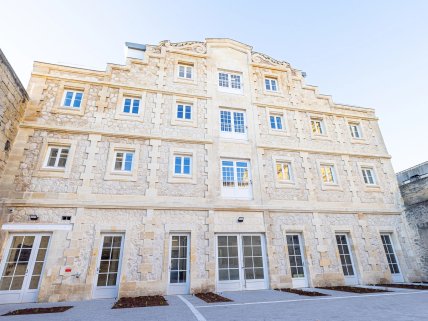
Business school in Bordeaux
Join a modern, friendly campus on the banks of the Garonne, in the heart of a lively, friendly city.
1/2
Testimonials
Our students are satisfied
-
Said LasmakCEO & CofounderCloé

-
Pablo Lacour

-
Mathieu Usai

Key figures for class 2024
For RNCP title n°40177
“Expert in Financial Strategy
Rate of presentation for certification
National pass rate
Overall integration rate
Hot satisfaction rate
Rates updated on 16/10/2025
Professional experience
Work-study training and internships
Through internships or work-study programmes, the MSc Investment Banking & Financial Engineering enables you to gain practical experience in M&A, hone your expertise in business valuation and build a network in investment banking.
-

INSEEC supports you
Personalized support in your search for a work-study program in investment banking, private equity, or financial consulting, with dedicated services.
-

Job Dating
Monthly meetings with investment banks, private equity funds, and consulting firms to secure your strategic work-study program.
-

Match'Up Platform
Numerous work-study programs and internships offered by our partner companies in M&A, private equity, structured finance, and M&A advisory services.
-

Corporate and Alumni Relations Department
A network of 10,000 partner companies and 115,000 alumni to facilitate your entry into the banking sector.
-

Coaching Workshops
Weekly workshops: professional posture, interviews, resumes, cover letters, self-confidence, LinkedIn, stress management, etc.
Business
What are the career prospects after an MSc in Investment Banking & Financial Engineering?
The MSc Investment Banking & Financial Engineering opens up opportunities in investment banking, private equity and M&A consulting, with rapid progression to M&A manager or financial director.

Application
What are the entry requirements for the MSc Business Banking & Financial Engineering?
Admission to 1st year
- Accessible to students who hold or are in the process of obtaining a Bac +3 diploma (university bachelor’s degree, professional bachelor’s degree, Bachelor’s degree, BUT), i.e. 180 ECTS credits, in the fields of finance, management, mathematics, economics or related fields.
- The course lasts two years.
- Apply using the online application form.
Admission to 2nd year
- Open to students who have completed or are in the process of completing a degree at Bac +4 level (Master 1, MSc 1, business school or engineering degree), i.e. 240 ECTS credits, with experience in finance, financial analysis or consulting.
- The course lasts one year.
- Apply using the online application form.
Your application
- Submitting your application
- Admission test
- Eligibility results
Tuition fees
What are the tuition fees for the MSc Business Banking & Financial Engineering?
Tuition fees for the INSEEC MSc vary from year to year. Several sources of finance are available to help you.
- 3rd year undergraduate
- 1st year 1 year12 290€
- 2nd year 1 year13 990€
- MSc's degree
Financial aid
INSEEC offers a number of financial aid schemes:
Alternating work placements or work-study contracts
Banking partnerships and their advantages
- 3rd year undergraduate
- 1st year 1 year11 850€
- 2nd year 1 year14 250€
- MSc's degree
Financial aid
INSEEC offers a number of financial aid schemes:
Alternating work placements or work-study contracts
Banking partnerships and their advantages
- 3rd year undergraduate
- 1st year 1 year12 290€
- 2nd year 1 year13 990€
- MSc's degree
Visit us at
Our MSc events
Event type
Campus
-
MSc
30/09
Open House Days Online
-
MSc
07/10
Open House Days in Marseille
-
MSc
14/10
Open House Days in Rennes
FAQ
All you need to know about the MSc Investment Banking & Financial Engineering
The most frequently asked questions about the MSc Business Banking & Financial Engineering. And if you would like any further information, our teams will be happy to discuss it with you!
Let’s meet
Still not sure? Meet our teams to help you make the right choice!
What are the objectives of the MSc Investment Banking & Financial Engineering?
The main objective of the programme is to train experts capable of managing strategic equity transactions in major investment banks and advisory firms. The programme provides in-depth knowledge of mergers and acquisitions, private equity, business valuation and structured finance.
The courses are designed to develop technical expertise in financial modelling and the analysis of complex financial data. The Master of Science also prepares students for positions as M&A account managers, investment banking analysts or M&A consultants. This course will enable you to move quickly into the highly selective investment banking and strategic finance consultancy sector.
Is it possible to do a sandwich course during the INSEEC MSc Business Banking & Financial Engineering?
Yes, work-study is at the heart of the programme’s teaching on the Paris and Bordeaux campuses. Students can apply for apprenticeship contracts with major investment banks, private equity funds and M&A consultancies.
A number of different timetables are available, depending on the partner company. This apprenticeship contract enables you to finance your studies while gaining professional experience in the demanding world of investment banking. The school offers personalised support to help you apply for the best opportunities.
The work-study application is prepared in conjunction with the Corporate Relations team, giving you an insight into the major banking institutions and players in the M&A sector.
Which partner companies recruit students from this programme?
Graduates are sought by :
- Major investment banks (BNP Paribas CIB, Société Générale CIB, Natixis CIB, Rothschild & Co).
- Strategy and M&A consultancies (KPMG, Deloitte Corporate Finance, PwC Deals).
- Private equity funds (Ardian, Eurazeo, PAI Partners).
- Specialist M&A boutiques.
- The finance departments of major groups.
- Family offices and development capital companies.
Our network of 10,000 partner companies offers a wide range of opportunities to enter the investment banking sector. These banking organisations regularly offer apprenticeship contracts to students on the programme. Discovering these companies at the careers forums organised on campus will help you target the positions that match your career plans as part of your career development.
What is private equity and why is it important in training?
Private equity involves investing in unlisted companies to support their development or transfer. This specialisation is at the heart of the programme, as it represents a major sector of business finance. The knowledge acquired in private equity enables students to understand the mechanisms of LBOs (Leveraged Buy-Outs), company valuations and value creation.
The courses cover the entire investment cycle, from identifying targets to developing holdings. This expertise is particularly valued by major financial institutions and will enable you to take up strategic positions as a private equity account manager or private equity analyst as part of an international career.
What is the admission process for the MSc Business Banking & Financial Engineering?
To apply for the programme, candidates must submit an online application including CV, covering letter, transcripts and recommendations. INSEEC MSc admissions will then review the application to ensure that the profile matches the requirements of the Master of Science.
Shortlisted candidates are invited to an interview to assess their motivation, career plans and knowledge of the banking sector.
When you apply for this programme of excellence, your application must demonstrate your appetite for corporate finance and your ability to thrive in a demanding environment.
Don’t hesitate to apply as soon as admissions open to maximise your chances.
Which languages are used for courses and exams?
The Master of Science in Investment Banking & Financial Engineering is taught in French at the Paris and Bordeaux campuses.
What soft skills are developed after an MSc in Investment Banking & Financial Engineering?
The programme develops the soft skills essential for success in the demanding environment of investment banking. The soft skills cultivated include :
- resistance to stress ;
- the ability to rapidly analyse complex data;
- excellence in customer relations with key accounts;
- rigorous execution ;
- teamwork on strategic operations;
- confidentiality.
This behavioural knowledge will enable you to operate in an environment where precision and speed are paramount. The programme also develops social and ethical responsibility, which is essential in the financial sector. The teaching includes real-life situations that enable students to discover the codes of the sector and prepare for positions as M&A advisers or financial engineering experts in major international investment banks.
How many hours of classes per week should I expect to have for the MSc Investment Banking & Financial Engineering?
The number of hours varies according to the pace of the course and the campus. For initial training, you should expect to spend around 25 to 30 hours a week in classes, divided between theory, practical case studies and group work on real-life M&A projects. In sandwich courses or apprenticeships, the timetable is adapted, with generally 2 days of classes per week or block weeks.
This format allows you to work in a company in the sector while following courses taught by working professionals. There is a heavy personal workload, particularly in financial modelling, analysis of company data and preparation for AMF certification. This organisation will enable you to develop solid expertise and acquire the knowledge needed to excel in major equity banking operations.
How does social responsibility impact on M&A transactions?
The social and environmental dimension (ESG) has become central to M&A and investment operations. The programme incorporates this major development in the sector through modules dedicated to extra-financial analysis and sustainability reporting. Knowledge of corporate social responsibility enables ESG risks to be assessed as part of due diligence and these criteria to be incorporated into valuation models.
This expertise will enable you to advise major companies on their responsible and sustainable development. Investment banks are looking for experts who can integrate these issues into their data analysis and strategic recommendations. The course also covers impact investing and social impact finance, fast-developing sectors that offer new job opportunities in responsible financial marketing.
Is there an active INSEEC alumni network to help with professional integration?
Yes, INSEEC has a network of 115,000 active alumni worldwide, including many professionals in major investment banks, private equity funds and M&A consultancies. This network facilitates access to employment and allows students to discover opportunities in the very closed sector of investment banking.
Graduates working as M&A directors, private equity partners or senior account managers regularly share their experience at events organised on the Paris and Bordeaux campuses.
A dedicated platform presents alumni services and networking events throughout the year. The Group’s schools also offer continuing education courses, enabling alumni to specialise further or discover new fields such as fintech or sustainable finance.
Many alumni act as teachers or mentors, creating a bridge between the academic world and the realities of the banking sector. This makes it easier for students to join the best institutions as part of their professional learning and career development in corporate finance and strategic financial marketing consultancy.
Made for you
Our other MSc courses
Specializations
Campus
-
- 1st year postgraduate
- 2nd year postgraduate
- 3rd year undergraduate
- 4- Year Degree
- Bachelor's Degree
- RNCP 5
MSc in Purchasing and Supply Chain Management
-
- 1st year postgraduate
- 2nd year postgraduate
- 3rd year undergraduate
Master of Science Data Management & AI for Business
-
- 1st year postgraduate
- 2nd year postgraduate
- 3rd year undergraduate
MSc Marketing & AI Manager
-
- 1st year postgraduate
- 2nd year postgraduate
- 3rd year undergraduate
MSc Digital Supply Chain, Purchasing & AI
-
- 1st year postgraduate
- 2nd year postgraduate
- 3rd year undergraduate
MSc Data Management, AI & Financial Strategy
-
- 1st year postgraduate
- 2nd year postgraduate
- 3rd year undergraduate
Master of Science Project Management