


What is an MSc in Sustainable Development & Ecological Transition Management?
The MSc Manager of Sustainable Development & Ecological Transition provides training in CSR, environmental strategy and change management. It is RNCP level 7 certified by the French Ministry of Employment. The first year lays the foundations in green management, sustainable communication and CSR labels. The second year deepens expertise in the circular economy, sustainable finance and managing the ecological transition. This professionally-oriented programme prepares students to manage sustainable development strategies in all types of organisation.
Professional certification
Level 7 (EU) professional certification in Business and Organisation Management, NSF code(s) 310, awarded by INSEEC MSc, registered under number 40353 on the RNCP (Répertoire National des Certifications Professionnelles) by decision of the Director General of France Compétences.
Objectives and skills
The aim of the MSc Manager of Sustainable Development & Ecological Transition is to train professionals capable of steering CSR strategy and supporting the ecological transition of organisations. You will learn how to draw up sustainable development policies, manage change and integrate environmental issues into strategic decisions.
The programme develops the following key skills:
- Devising and implementing the company’s/organisation’s strategic orientations.
- Steering the company’s financial and non-financial strategy.
- Steering the marketing and sales strategy.
- Managing teams and driving organisational change.
In addition to these common blocks of skills, there is an optional sector block:
- Manage and implement the company’s social and environmental responsibility projects
The courses
The courses presented below are given as examples, and may vary slightly depending on the teaching campus. Course content is adapted each year to take account of regulatory changes, climate issues and innovations in sustainable development.
The pace of courses may differ from campus to campus and depending on whether the course is being run under a work placement agreement (initial) or a professionalization/apprenticeship contract (continuing).
The work-study contract must be signed for the entire duration of the MSc 1 + MSc 2 or MSc 2 program.
1ʳᵉ year – Cross-disciplinary and foundation courses
60 ECTS credits
This first year develops the managerial and strategic skills that are essential for any sustainable development professional.
- Professional tools and methods
- Corporate strategy and business plan
- Software and decision-support tools
- Budget management and dashboards
- Negotiation applied to HR
1ʳᵉ year – Specialised courses
Specialised courses develop skills in CSR, green management and ecological transition.
- Data structuring and GenAI
- Introduction to CSR
- Sustainable development and green management
- Communication and sustainable development
- Management and leadership
- History and geopolitics of sustainable development
- Social policy and innovation
- Psychology of work and organisations
- Introduction to change management
- CSR labels and quality
- CSR challenges
- Fresco of climate and new narratives
- Socially responsible investment and green finance
- Internal communications
2ᵉ year
60 ECTS credits
The second year deepens expertise with advanced modules in sustainable development strategy, the circular economy and CSR management.
Corporate strategy
- Sustainable development and CSR strategy and issues
- Innovation and sustainable development
- Professional tools and methods
- Circular economy and tech for good
- Environmental issues and governance
Steering the financial strategy
- Tools and indicators for sustainable development, CSR and transition
- Sustainable finance and responsible investment
- SD rights, regulations and standards
- Sustainable development and CSR audit
Marketing and sales management
- Communication and sustainable development
- Eco-design and marketing
- Sustainable supply chain management
- Energy transformation and eco-innovation
Team management
- Management and change management applied to CSR and SD
- HR management, inclusion and CSR
- QHSE and QSE management
CSR management
- Sustainable territories and smart cities
- Energy transformation and eco-innovation
- Business ethics
- Applied research dissertation
Assessment procedures
The two years of the programme combine knowledge of sustainable transitions and experimentation in committed organisations, open to initial or sandwich training.
Course validation
- Annual certification implies the accumulation of 60 ECTS credits per level.
- The MSc title is awarded by successive validation of the two years, constituting a total of 120 ECTS credits.
- The award of certification depends on the exhaustive aggregation of all the skill blocks.
- Each block requires full validation with a minimum level of 10/20 for each of the associated skills.
- Partial validation of a block is not possible.
Conditions for obtaining certification
- Essential validation of all blocks of cross-disciplinary skills that are the same for all courses.
- Professional commitment of at least 132 days in the second year (MSc 2) for candidates undergoing initial training.
Assessment procedures
Your learning is systematically assessed throughout the course by :
- One-off assessments and final evaluations carried out in class.
- Deciphering CSR cases dealt with individually and/or in teams.
- Individual and/or group oral pleas.
- Individual and/or group written submissions.
- Impact projects and actions in a real organisational context.
- An applied research dissertation.
Is this diploma recognised by the State?
Yes, it is an official certification from the Ministry of Labour. France Compétences guarantees the quality of INSEEC and its training courses.
- A demanding quality label appreciated by companies
Our campus
In France
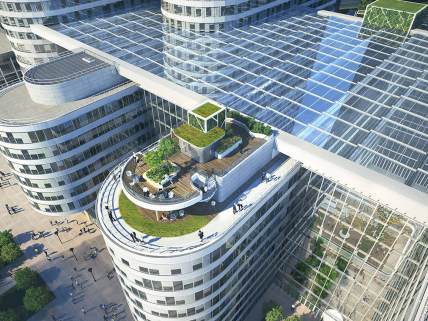
Business school in Paris
Discover three modern, easily accessible campuses in iconic Paris locations.
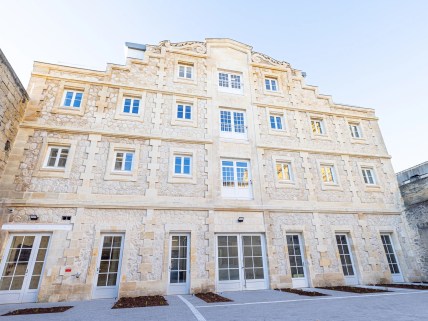
Business school in Bordeaux
Join a modern, friendly campus on the banks of the Garonne, in the heart of a lively, friendly city.
1/2
Testimonials
Our students are satisfied
-
After graduating with an MSc in Marketing, Communication & Brand Strategy from INSEEC Bordeaux, I created CLOE, a platform that facilitates access to student housing. Thanks to the La FabriK For Good incubator, I benefited from tailored support and a network of experts to develop a project with social impact, serving student life and inclusion.
Said LasmakCEO & CofounderCloé
-
After completing my MSc at INSEEC, I started at Bosch as a Strategic Marketing Analyst, before joining Oracle as an EMEA Business Development Consultant. The skills I acquired at INSEEC enabled me to build this international career path, which led me to my current position at Google.
Nabil AbdelhalimIndustry ManagerGoogle
Key figures for class 2024
For RNCP title n°40353
“Business and Organisation Manager”
Rate of presentation for certification
National pass rate
Overall integration rate
Hot satisfaction rate
Rates updated on 16/10/2025
Professional experience
Internships
Internships placements give you the opportunity to manage CSR projects and support the ecological transition within companies, local authorities or consultancies. You’ll develop sustainable strategies, conduct audits and manage change to develop your expertise and accelerate your integration into CSR functions.

INSEEC supports you
Un accompagnement personnalisé dans votre recherche d’alternance ou de stage en RSE et développement durable.

Jobs dating
Monthly meetings to meet our partner companies committed to ecological transition and CSR.

Match’Up
Thousands of work-study programs and internships in CSR strategy, sustainable development, and the circular economy.

Corporate and Alumni Relations Department
A network of 10,000 partner companies and 115,000 alumni to help you find a job in CSR.

Coaching Workshop
Weekly group or individual workshops: professional posture, interviews, resumes, cover letters, self-confidence, LinkedIn, stress management, etc.
Business
What are the career opportunities after an MSc in Sustainable Development and Ecological Transition Management?
After completing INSEEC’s MSc Manager of Sustainable Development & Ecological Transition, there are many opportunities for you to enter the CSR, sustainable development consulting and responsible management professions. You will benefit from rapid career development prospects towards CSR management or sustainable development manager positions.

Application
What are the entry requirements for the MSc Manager of Sustainable Development & Ecological Transition?
Admission to 1st year
- This course is open to holders of at least 3 years’ higher education in the fields of sustainable development, CSR, management, the environment, political science or sociology: university degree, professional degree, Bachelor’s degree from a business school or BUT.
- Apply using the online application form.
Admission to 2nd year
- Open to holders of a validated Bac +4 in the fields of sustainable development, CSR, responsible management or environmental management: university Master 1, 1ʳᵉ year Master’s degree in a business school or equivalent.
- Apply using the online application form.
Your application
- Submitting your application
- Admission test
- Eligibility results
School fees
What are the tuition fees for the MSc Manager of Sustainable Development & Ecological Transition?
Tuition fees for the INSEEC MSc vary from year to year. Several sources of finance are available to help you.
- 3rd year undergraduate
- 1st year 1 year11 390€
- 2nd year 1 year13 450€
- MSc’s degree
Financial aid
INSEEC offers a number of financial aid schemes:
Alternating work placements or work-study contracts
Banking partnerships and their advantages
- 3rd year undergraduate
- 1st year 1 year10 990€
- 2nd year 1 year13 490€
- MSc’s degree
Financial aid
INSEEC offers a number of financial aid schemes:
Alternating work placements or work-study contracts
Banking partnerships and their advantages
- 3rd year undergraduate
- 1st year 1 year11 390€
- 2nd year 1 year13 450€
- MSc’s degree
Visit us at
Our MSc events
Event type
Campus
-
MSc
18/03
Open House Days in Online
-
MSc
21/03
Open House Days in TouIouse
-
MSc
26/03
Campus Days in Chambéry
FAQ
All you need to know about the MSc in Sustainable Development & Ecological Transition Management
The top questions asked about the MSc in Sustainable Development & Ecological Transition. And if you’d like to know even more, our teams will be happy to talk to you about it!
Let’s meet
Still not sure? Meet our teams to help you make the right choice!
Is it possible to do a sandwich course during INSEEC’s MSc Manager of Sustainable Development & Ecological Transition?
Yes, the Master of Science in Sustainable Development & Ecological Transition Management can be taken on a sandwich course over 12 months (MSc 2) or 24 months (MSc 1 + MSc 2). This work-study programme gives you the opportunity to gain professional experience in a CSR department, consultancy firm or local authority, and to develop practical skills in managing climate change and steering the transition.
Is INSEEC’s MSc Manager of Sustainable Development & Ecological Transition recognised by the State?
Yes, the programme delivers the RNCP 40353 level 7 title “Manager of Companies and Organisations”, recognised by the French government and registered on the Répertoire National des Certifications Professionnelles. This qualification gives students easier access to CSR functions and enables them to join the senior management of major French and international organisations.
Which languages are used for courses and exams?
Courses on the Master of Science in Sustainable Development & Ecological Transition Management are taught in French. Courses in English are integrated to strengthen your language skills and prepare you for exchanges with international stakeholders. This global approach to languages prepares students for the challenges of sustainable development on a global scale.
Is there an active INSEEC alumni network to help with professional integration?
Yes, you benefit from access to the network of 115,000 former INSEEC graduates in all sectors. Consult the profiles of alumni working in major companies, NGOs and consultancies specialising in sustainable development. This network facilitates exchanges with professionals who acquire global expertise in climate change and CSR issues.
What are the objectives of the MSc Manager of Sustainable Development & Ecological Transition?
The Master of Science in Sustainable Development & Ecological Transition Management aims to train professionals capable of :
- Managing CSR strategy and the ecological transition of organisations.
- Integrating climate change issues into strategic decisions.
- Supporting the sustainable transformation of businesses and local authorities.
- Measuring and reducing the environmental and social impact of our activities.
This course prepares students for careers in corporate social responsibility in all business sectors and with many different types of organisation.
What is the admission process for the MSc in Sustainable Development & Ecological Transition?
There are three stages to admission: an online application, a review of your academic and professional record, and a personal interview. Students wishing to enrol on this course must demonstrate their commitment to environmental issues and their knowledge of the impact of climate change on the economic world. See the main content of the admissions page for details.
What is the duration of INSEEC’s MSc Manager of Sustainable Development & Ecological Transition?
The course lasts 2 years (MSc 1 + MSc 2) for those with 3 years of higher education, or 1 year (MSc 2 only) for those with 4 years of higher education. This course enables students to acquire in-depth knowledge of sustainable development and ecological transition, preparing them for entry into the many sectors that wish to integrate CSR.
What sectors and organisations recruit graduates in sustainable development?
Graduates of the Master of Science in Sustainable Development and Ecological Transition Management will find opportunities in a wide range of sectors:
- Large companies in all sectors committed to the transition.
- CSR strategy and sustainable development consultancies.
- Local authorities and public institutions.
- NGOs and environmental associations.
- Start-ups in the circular economy and tech for good.
These organisations are looking for managers who have been trained in the challenges of climate change and are capable of managing projects linked to the ecological transition. The knowledge acquired will enable them to work with stakeholders and measure the overall impact of proposed actions in an international context.
What tools and methods are taught to manage the ecological transition?
The programme incorporates many practical tools and professional methods:
- Fresco of climate and new narratives.
- Sustainable development and CSR audit.
- Tools and indicators for measuring environmental impact.
- Carbon footprint and life cycle analysis.
- QHSE and QSE management systems.
Students acquire practical skills from professional contributors. This knowledge of environmental sciences and law enables them to manage projects linked to the challenges of climate change from a global perspective, both in France and worldwide.
What soft skills have been developed following the MSc Manager of Sustainable Development & Ecological Transition?
The skills acquired during this Master of Science Manager of Sustainable Development & Ecological Transition include:
- Systemic vision and global thinking on environmental issues.
- The ability to unite stakeholders around sustainable projects.
- The spirit of innovation and creativity when it comes to ecological solutions.
- Resilience and commitment in the face of the challenges of climate change.
- A sense of ethics and social responsibility.
These soft skills are essential for success in CSR positions and for supporting the sustainable transformation of organisations. The course prepares students to become responsible managers in large companies, local authorities or the social economy.
Made for you
Our other MSc courses
Specializations
Campus
-
- 1st year postgraduate
- 3rd year undergraduate
MSc Marketing & Brand Management
-
- 1st year postgraduate
- 3rd year undergraduate
MSc International Financial Analyst
-
- 1st year postgraduate
- 3rd year undergraduate
MSc Start-Up & Digital Transformation
-
- 1st year postgraduate
- 3rd year undergraduate
MSc Risk Management, Control & Compliance
-
- 1st year postgraduate
- 3rd year undergraduate
MSc Marketing, Communication & Brand Strategy
-
- 1st year postgraduate
- 3rd year undergraduate
MSc Outdoor Sports Marketing & Customer Experience