
What’s the difference between an oenologist and a sommelier?
The oenologist, like the sommelier, needs training and experience throughout his or her career to excel in this field. The wine industry is a sector that is recruiting, and oenologists and sommeliers both occupy important positions. Would you like to work in the wine sector and become one of these two professions? But what’s the difference between oenologist and sommelier ?
Contents
In a nutshell:
- Oenologists and sommeliers are important professions in the wine sector.
- The oenologist’s main task is to improve the wine-making process.
- The sommelier is a professional wine connoisseur who generally works in prestigious restaurants.
- The oenologist, like the sommelier, receives a comfortable salary.
- It is possible to train in the wine business at business schools such as INSEEC.
Context
In what field do oenologists and sommeliers work?
Oenologists and sommeliers are both important professionals in the wine sector. They may work in the same field and/or come across each other very often at the same wine-related events.
That said, the difference between oenologists and sommeliers lies mainly in their area of expertise, their responsibilities and the environment in which they practise their profession. The former is an expert in wine and is involved in the vinification process, whereas the latter, an expert in serving wine, is more involved in tasting and selection.
For these reasons, the oenologist may spend more time in the vineyards, whereas the sommelier spends most of his time in the wine cellars of prestigious restaurants. In all cases, the two professions and the tasks they entail are complementary in order to satisfy consumers and wine lovers.
Definition
What does the job of oenologist involve?
The job of oenologist mainly involves improving the production, taste and quality of wine by advising wine designers throughout the production process. Among other things, the oenologist supervises production, from vine cultivation to vinification, carries out analyses to guarantee wine quality and may contribute to research to improve vinification techniques and product quality. Spending time in the cellars and vineyards is part of your job as an oenologist so that you can advise winegrowers.
Missions
What does a sommelier do?
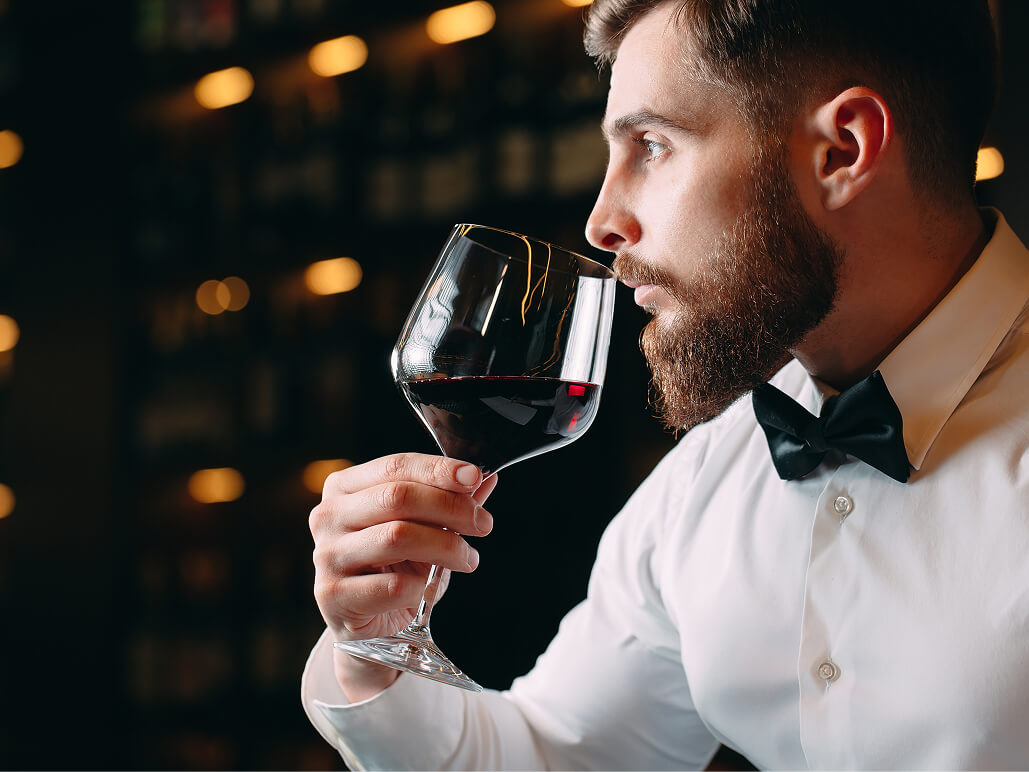
Unlike oenologists, sommeliers work with wine as a finished product. Their main role is to advise on the choice of wines to match preferences and dishes, and to manage a restaurant’s wine cellar. He or she is responsible for defining the main differences between different wines and determining, among other things, the best accompaniments. In this way, he or she is then able to advise consumers on the event, the menu and the wines selected, offering a high-quality service based on extensive expertise.
Profile
What qualities and skills do you need to become an oenologist or sommelier?
Oenologists and sommeliers share a number of qualities and skills that you need to develop if you want to work in the profession.
The most essential of these are :
- A passion for wine;
- Sensory sensitivity ;
- Professionalism;
- Patience;
- A great eye for detail;
- Thoroughness;
- Precision;
- Creativity.
Remuneration
Oenologist vs sommelier: what do these wine professionals earn?
Oenologists and sommeliers are both well-paid professions, depending on their suitability. If you prefer winemaking, you can become an oenologist and earn a monthly salary of around 2,000 euros when you start out. This figure can then rise with your experience and reach up to 5,000 euros if you become a recognised oenologist.
Would you rather become a “taste specialist” for wine? If so, become a sommelier and earn at least €2,000 a month as a beginner. Depending on your expertise, you can earn up to €3,200 or even more as a sommelier.
Course
How do you become an oenologist or sommelier?
To become an oenologist or sommelier, you need to develop certain technical skills. That’s why it’s vital to train for one of these professions. There is a wide range of training courses available at different establishments, from the CAP (vocational training certificate) to a Master’s degree, i.e. a diploma at bac + 5 level.
However, the most important factor in becoming a professional oenologist or sommelier is experience. You may have to go through a number of positions before you are confirmed in one of the two professions, and this can take several years.
Offers
What courses does INSEEC offer to help you work in the wine industry?
Would you like to make a career in the wine industry and learn about its professions? JoinINSEEC and choose the programme that interests you from among those on offer. Visit our website to find out about the different options and details of the courses available, and consult our FAQs if necessary.
After your baccalaureate, obtain a diploma at bac +3 level from our business school by opting for a Bachelor’s degree and choosing one of the following specialisations:
If you would like to go on to do a Master’s degree and obtain a 5-year postgraduate qualification, choose to do: A Master of Science in Wine and Spirits Marketing & Customer Experience.
In the same vein




All about
Our guides
Consult our guides to find out all you need to know about education, work-linked training and careers.